In Venice, Contract Is an Old Trade
Over five centuries ago, whoever built and furnished a Venetian villa already worked this way: on commission, made to measure, with a written specification and a client who would not compromise. Contract, long before it became an international business, was a Venetian trade. This isn't nostalgia: it's the thread that holds together everything we do — and a claim to legitimacy that can't be improvised.
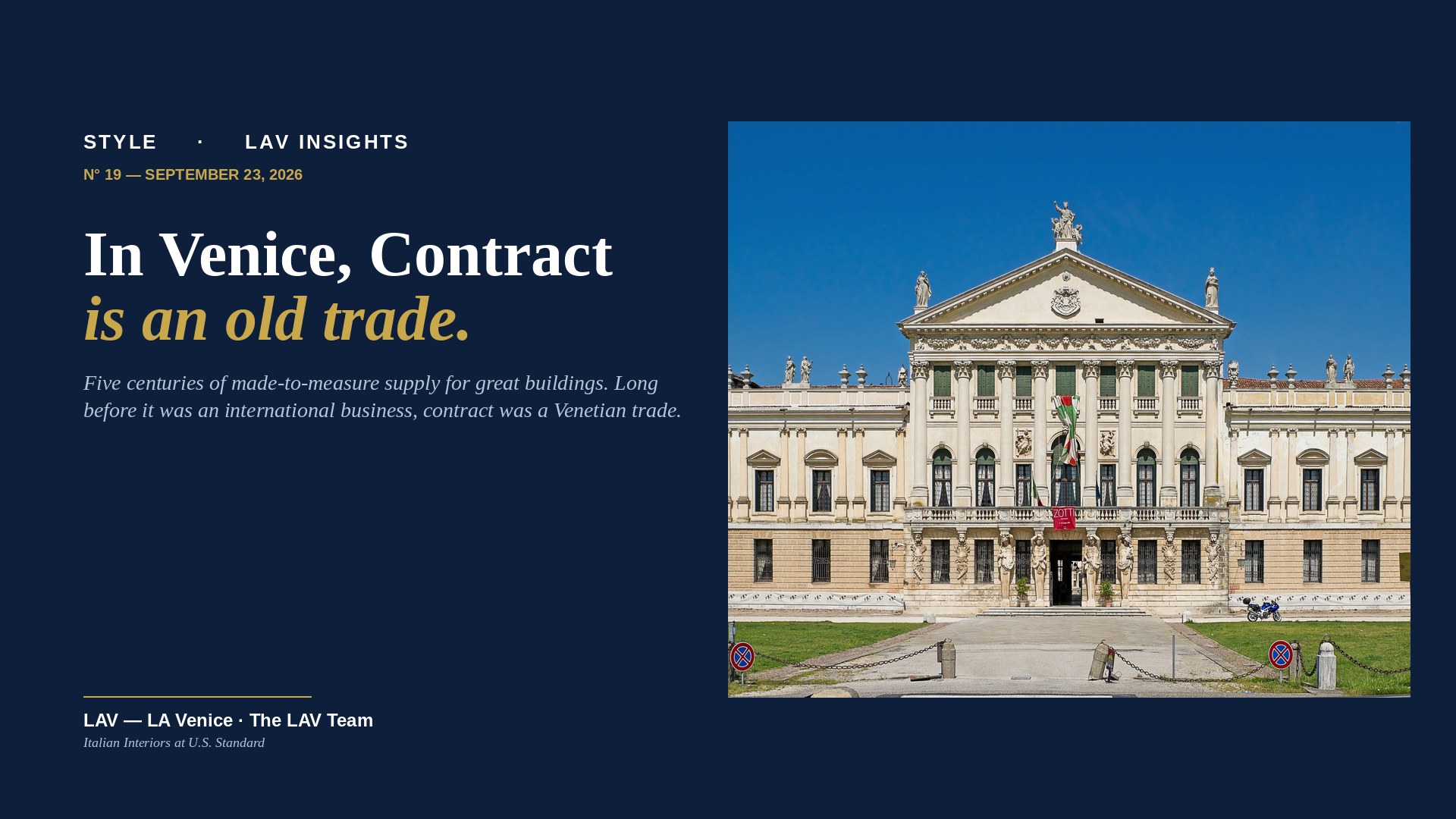
When an American developer or Interior Designer meets an Italian supplier, they are looking for contract competence: made-to-measure supply for large buildings, governed by a specification and delivered to a client who will not compromise. It is exactly what the Veneto has done for five hundred years. The villas of the Serenissima — their glass, their windows and doors, their Venetian terrazzo floors — were born on commission, for a specific client, with written agreements and coordinated craftsmen. No single company invented this method: it was born here, it is part of our culture, and its fundamental rules are still the same.
1. The Venetian villa was already a contract project
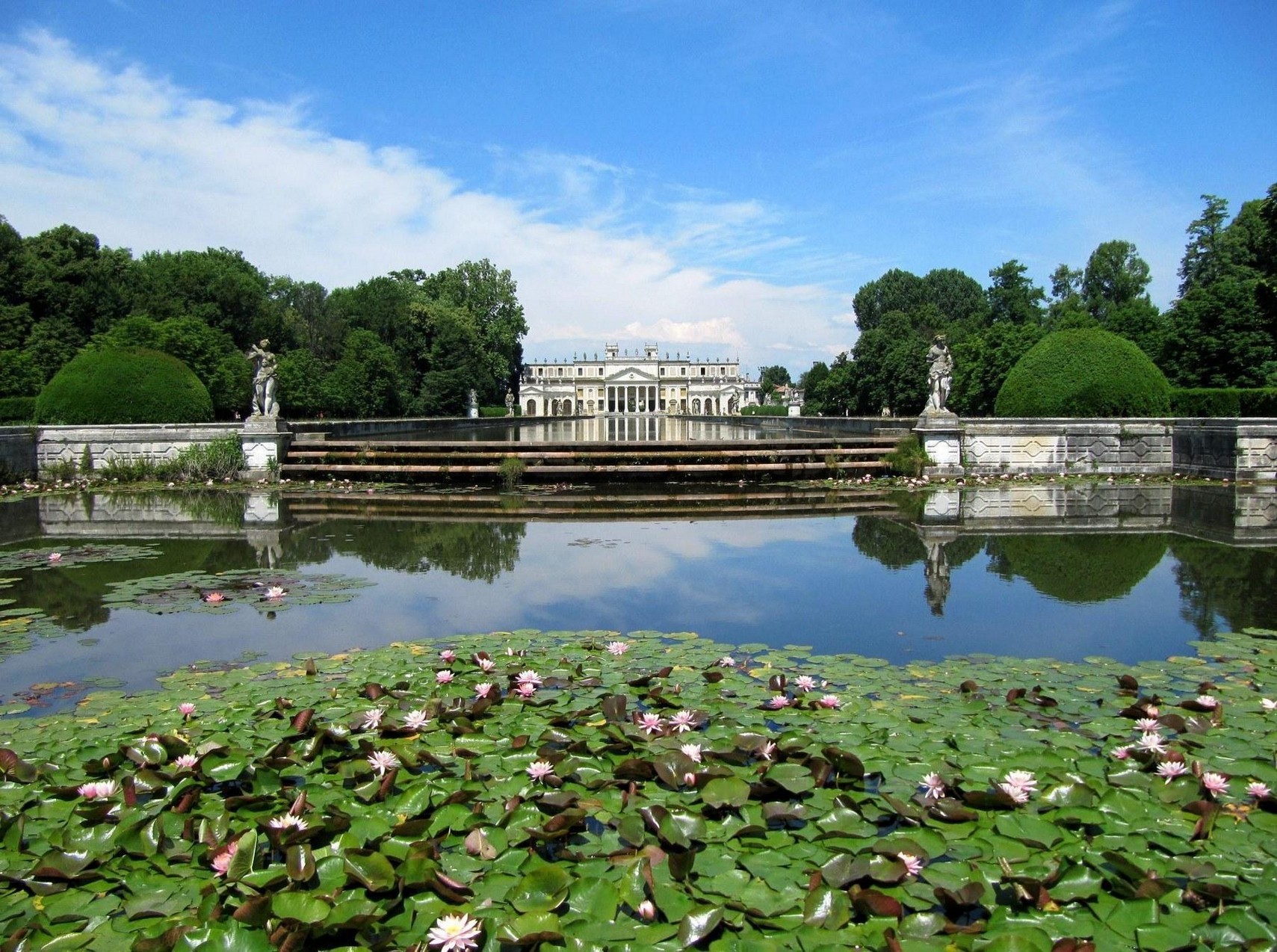
Between the fifteenth and eighteenth centuries the Republic of Venice covers the mainland with villas: not ordinary country houses, but buildings meant to represent a family and govern an estate. Andrea Palladio codifies their form in the sixteenth century; in the eighteenth the scale grows, and residences like Villa Pisani, on the Riviera del Brenta, become its peak.
Behind every villa is the same structure we now call contract: a client with precise requirements, a design that sets the rules, and a chain of specialized craftsmen — masons, stonecutters, plasterers, glassmakers, carpenters — working made-to-measure for that building, not from a catalog. The names of the trades change; the way of working together does not.
2. Glass, windows, floors: everything on commission
Nothing, in a villa, was a standard product. Glass came blown from Murano: chandeliers and pieces designed for that room, and panes cut to the measure of that window. Windows and doors were built to the opening, in seasoned wood with hand-worked hardware; the floor was born in place, poured and polished — Venetian terrazzo, still made today by mixing marble chips.
It was work made of measurements taken on site, approved samples, and craftsmen who answered for the result. The same logic with which, today, a kitchen or a glass wall is supplied for a project: made to measure, verified in the field, installed — not simply shipped.
3. The specification, back then
There is a word that ties those building sites to ours: the specification — the capitolato. The agreements between client and craftsmen were put in writing — what to do, with which materials, in what times, on what terms. It wasn't bureaucracy: it was the way to govern a complex supply and to protect both parties.
A Venetian client was demanding out of necessity: money, reputation and the family name — carved on the façade — were at stake. Whoever supplied did not only have to deliver: they had to guarantee. It is the difference, still true today, between a supplier and a partner.

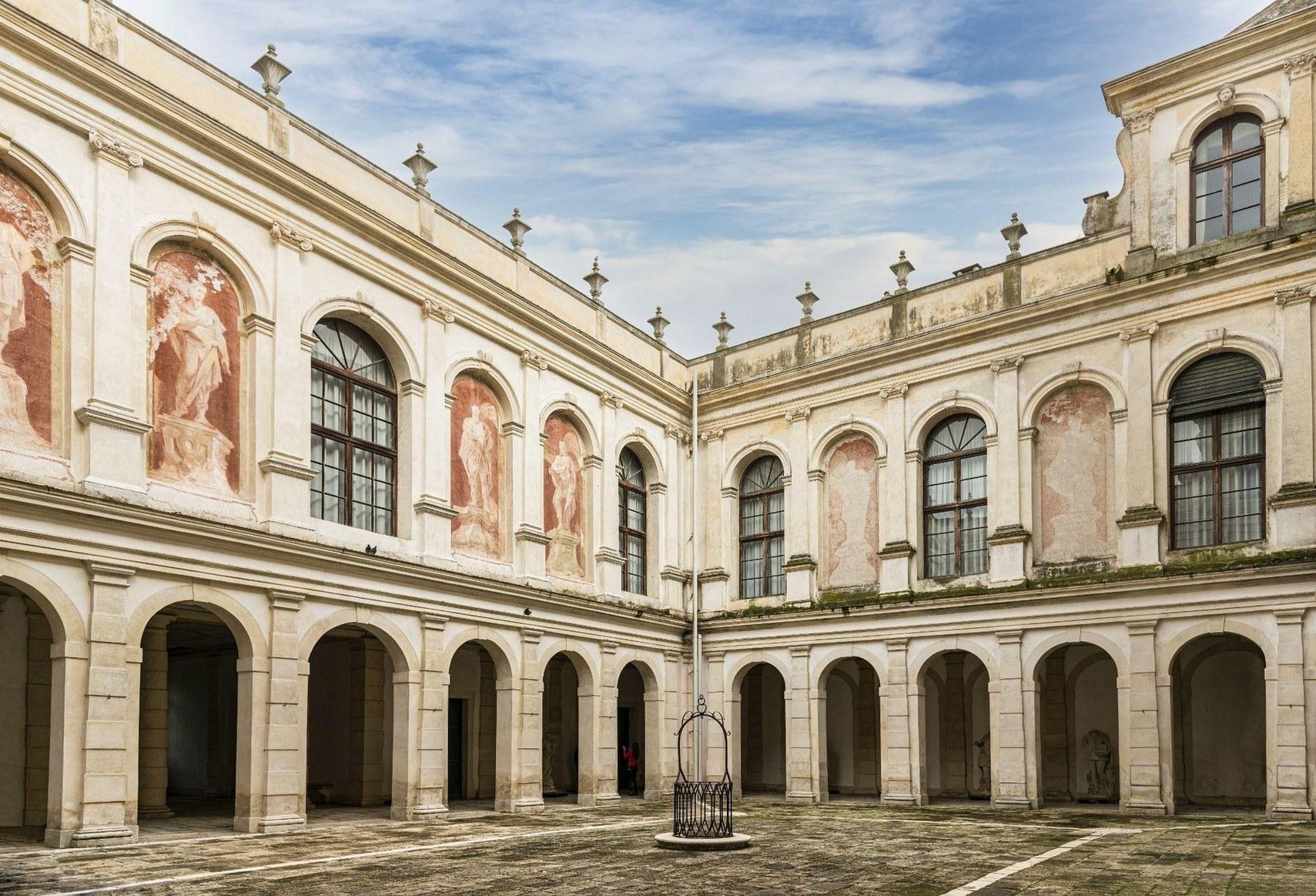
4. Villa Pisani: thirty-five years of building, one hundred and fourteen rooms
The numbers of Villa Pisani tell, better than any definition, what that trade was. The building site stays open from 1721 to 1756: thirty-five years. The design calls for one hundred and fourteen rooms, as many as the doges of Venice up to Alvise Pisani, the one hundred and fourteenth; today there are one hundred and sixty-eight, over fifteen thousand square meters. The architect, Girolamo Frigimelica, dies with the works under way, and it is Francesco Maria Preti who completes the building. The ballroom is frescoed by Giambattista Tiepolo only in 1760-62: four years after delivery.
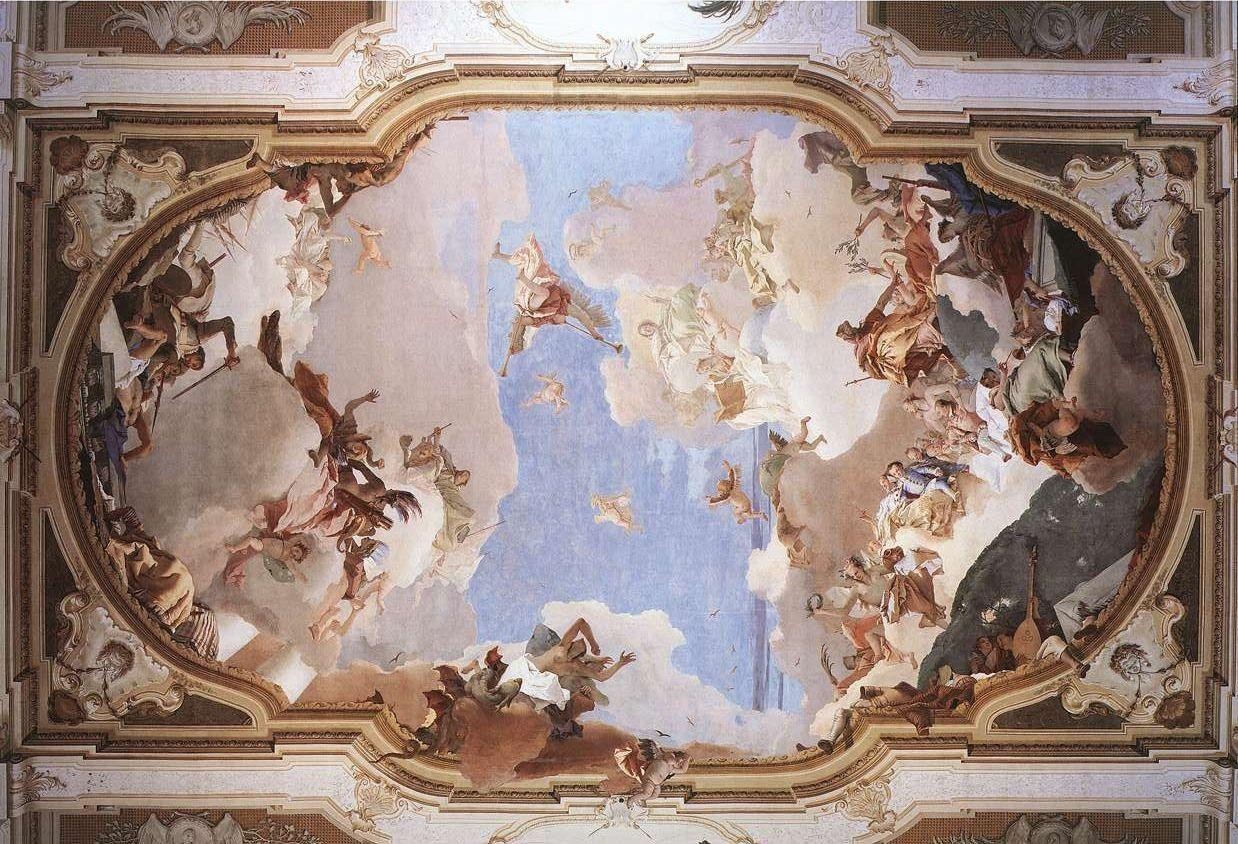
One hundred and fourteen rooms to bring all to the same standard. Thirty-five years of building. A project lead replaced mid-course. The prized finishes arriving last, with the building already delivered. Anyone working today on a large residential project recognizes every line of this list: it is a multifamily, three centuries ahead of its time.
It is also the point where the trade gets complicated. On a supply of two hundred units the problem isn't producing well once: it is producing identically two hundred times, for months. That is why a lot of terrazzo chips, of leather or of veneer is locked at source before the first delivery leaves, and the approved sample stays on site until the last room — not as a formality, but because it is the only way to prove that room number two hundred is identical to the first.
5. How you can still tell
The same techniques still exist, alongside their industrial imitations. Telling them apart doesn't take a restorer's eye: three details are enough.
A real Venetian terrazzo has no joints: it is poured in place in a single piece, and the marble chips continue from one room to the next without ever breaking. A tile that imitates it repeats the same pattern every few pieces — and the pattern reveals itself the moment you look for it. The first is polished; the second is replaced.
A window built to the opening closes against a wall that is not square, because no old wall is, and it needs no wide trim to hide the gap. You recognize a standard window precisely by that: by how much material it takes to make the difference between frame and opening disappear.
Mouth-blown glass is never perfectly flat: the thickness varies, a few bubbles stay inside, and the light passing through it moves as you move. Industrial glass is motionless. It is why a Murano chandelier lights a room in a way a copy cannot reproduce.
Distances change — from the Veneto hinterland to an American job site; certifications change; the scale changes, from the single palace to the two hundred units of a multifamily. But the questions have stayed the same: who is the client, what does the specification say, who takes the measurements, who approves the sample, who answers for the result.
A competitor can copy a product; it cannot claim five hundred years of villas.
Contract is not a recent business model, it is an ancient trade — and a Venetian one.
For the next project
If you're choosing who will supply the interiors of a large building, one question says more than a thousand references: how long has the party in front of you been making made-to-measure supply governed by a specification? In Venetian contract, the answer is measured in centuries — which is why, around here, a specification isn't a formality but the natural way of working.
Get New Insights via Email.
One article per month. No drip sequences. Unsubscribe in one click.